Coins.Game
Coins.Game originals combine fast game loops with provably-fair mechanics
 Available in US

Coins.Game lists a recognizable set of crypto-casino originals: Crash, Dice, Mines, Plinko, Doge Racer, Ethereum Rush and Bitcoincash. These games are described as provably fair, giving players a way to check the integrity of outcome generation. That verification is useful, but it should be read alongside the game rules, stake size and session pace rather than treated as a guarantee of favorable odds.
- Named originalsCrash, Dice, Mines, Plinko and more
- Fairness modelProvably fair
- Jetgames snapshot16 titles in one catalogue review
On this page
- What the originals lineup contains
- How the game formats differ
- What provably fair checks
- Where verification stops
- Why pace changes session exposure
- A practical way to compare originals
- Common originals questions
Table of Contents
- The originals lineup covers several distinct risk patterns
- Short rounds can turn small stakes into large turnover quickly
- Provably fair lets you check the integrity of an outcome
- A fair outcome calculation can still produce an unfavorable game
- Fast mechanics make bankroll discipline more important
- Compare the mechanic first, then the fairness check
- Questions about Coins.Game originals
- Coins.Game originals reward verification discipline more than headline speed
The originals lineup covers several distinct risk patterns
Coins.Game coverage names Crash, Dice, Mines, Plinko, Doge Racer, Ethereum Rush and Bitcoincash. A separate catalogue review counted 16 Jetgames titles. The named games are more useful than a raw catalogue total because each format creates a different decision loop: some ask you to choose a multiplier, some ask you to reveal positions, and others resolve through a race or drop-style mechanic.
Crash
The core decision is when to exit before the multiplier ends. Faster rounds can encourage repeated bets, so session exposure depends heavily on how frequently you re-enter.
Dice
Dice-style originals reduce the interface to probability and payout settings. The apparent simplicity makes stake size and repetition easier to overlook than in a slower table game.
Mines
Mines adds a sequence of reveal decisions. Each extra reveal changes the risk/reward trade-off, turning one wager into a chain of choices rather than a single result.
Plinko
Plinko presents many possible landing outcomes in a visually simple format. The distribution of those outcomes matters more than the animation itself.
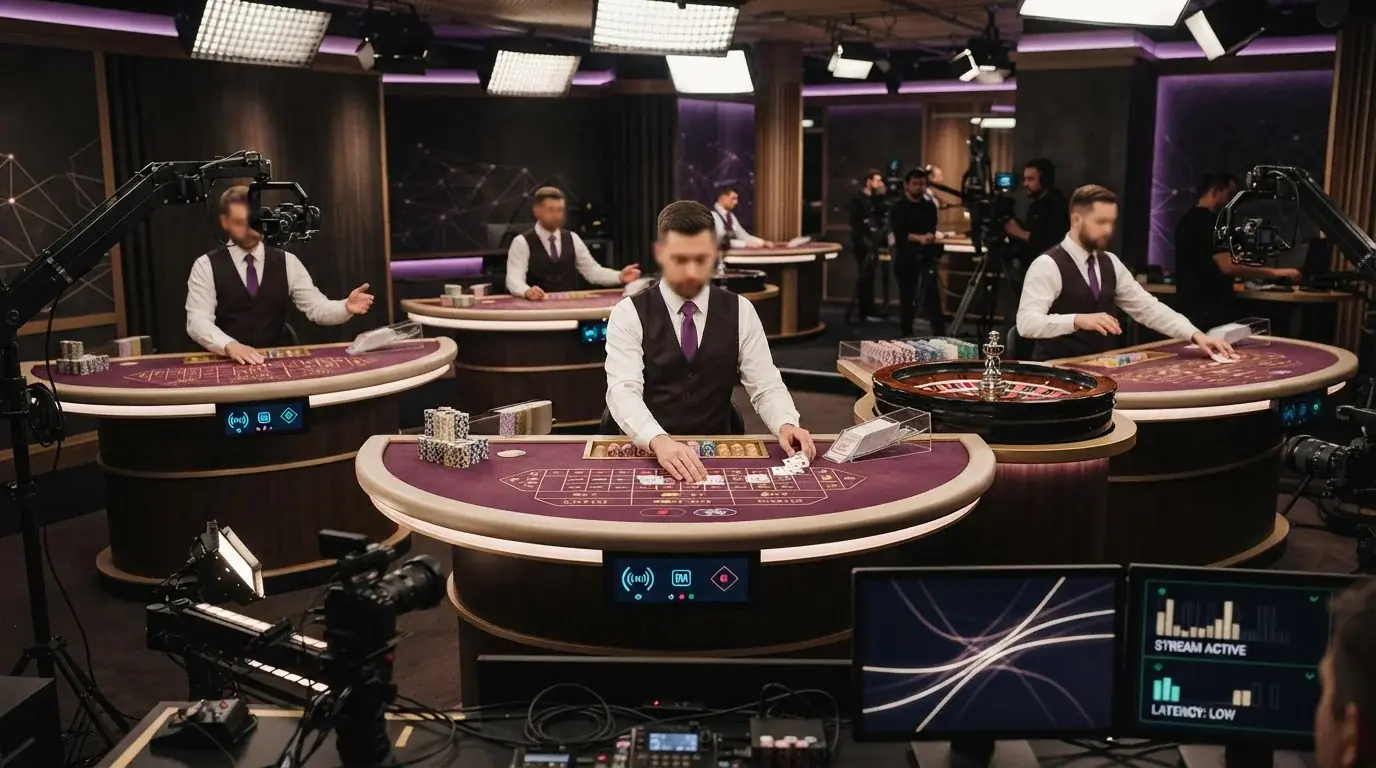
The broader Coins.Game games guide places these originals alongside the third-party provider catalogue. If you prefer dealer-led formats instead, the live-casino section follows a very different pace and rule structure.
The central distinction is mechanical, not cosmetic: two originals can both be provably fair while producing very different volatility, decision frequency and bankroll pressure.
Short rounds can turn small stakes into large turnover quickly
Crypto originals are often designed around compact rounds. A single stake may look modest, but the total amount wagered grows with repetition. If someone places a $1 illustrative stake 100 times, the session turnover is $100 even though the individual bet never exceeded $1. At 500 rounds, the same stake creates $500 of turnover. Those figures are examples for understanding pace, not Coins.Game limits or game parameters.
| Format | Main player decision | What to watch during a session |
|---|---|---|
| Crash | Choose when to exit before the round ends. | Repeated re-entry and the temptation to chase a previous early crash. |
| Dice | Select a probability or payout profile. | How quickly repeated bets accumulate turnover. |
| Mines | Decide how many safe positions to reveal before cashing out. | Escalating risk as more positions are opened. |
| Plinko | Choose a stake and available risk setting where offered. | The distribution of outcomes over many drops, not one visually dramatic result. |
| Race-style originals | Commit to the race mechanic and wait for the result. | Round frequency and repeated staking across short cycles. |
This is why comparing originals by theme alone is weak. A racing skin, a grid or a graph can make two games look unrelated, while both may still create the same practical issue: a rapid sequence of independent wagers. Session length, stake frequency and stop conditions are more useful controls than visual familiarity.
Provably fair lets you check the integrity of an outcome
A provably-fair system normally uses cryptographic inputs such as a server seed, a player or client seed and a nonce or round counter. The casino can commit to a value before the wager by publishing a cryptographic hash. After the relevant seed is revealed, the player can recompute the result and compare it with the result that was shown.
- Record the commitment. A hash represents the hidden server-side value before the result is known to the player.
- Keep the player-side input. A client seed or equivalent input gives the player a component in the calculation rather than leaving every input under one party’s control.
- Check the revealed values. After the round or seed rotation, the revealed server value should reproduce the earlier hash commitment.
- Recalculate the result. The verifier logic should map the seeds and round counter to the same outcome displayed in the game.
A successful check answers a narrow but useful question: did the published cryptographic inputs reproduce the displayed result? It is strongest as an integrity check, not as a measure of whether the game is favorable.
A fair outcome calculation can still produce an unfavorable game
Provably fair and player advantage are different concepts. Cryptographic verification can show that the outcome was calculated consistently from committed inputs. It does not change the probability model or remove the mathematical margin built into a game. A game can be provably fair and still have negative expected value for the player over repeated play.
What verification can establish
- The revealed server value matches the earlier cryptographic commitment.
- The displayed result can be reproduced from the specified inputs and algorithm.
- A round was not simply rewritten after the result became known.
What still requires separate judgment
- The house edge or return profile of the game.
- How volatile the payout distribution is.
- Whether the stake size fits the player’s bankroll.
- How repeated fast rounds change total session exposure.
That separation matters because “provably fair” is easy to read as a broad quality label. It is better understood as one technical property of a game. The betting rules still determine the economic outcome distribution.
Fast mechanics make bankroll discipline more important
Originals such as Crash, Dice and Mines can resolve much faster than dealer-led games. When the interval between decisions is short, a player can increase turnover without consciously increasing the nominal stake. The risk comes from repetition: many small independent bets can create a much larger total amount wagered than the opening balance suggests.
Stake size
The amount placed on one round.
Round count
The number of separate wagers made during the session.
Turnover
Stake multiplied by the number of rounds, before wins or losses are netted.
Variance
The spread of possible short-term outcomes around the long-run mathematical expectation.
A practical control is to set a session budget and a stop point before opening the game. That is more robust than deciding after a streak has already started. If you fund the account with crypto, the payments guide also matters because coin-price movement and irreversible transfers add a separate layer of risk outside the game itself.
Provably-fair verification does not reduce gambling risk. Rapid repeated play can magnify losses quickly even when every outcome is calculated correctly.
Compare the mechanic first, then the fairness check
The most useful way to choose among Coins.Game originals is to separate three questions. First, understand the game mechanic: what decision are you making and how quickly does the round repeat? Second, identify what the fairness check proves and how you would verify a result. Third, look at the game’s own rules for probability, payout and any available return information before deciding on a stake.
- Know whether the round is a single decision or a chain of decisions.
- Check how frequently you can place another wager.
- Use the provably-fair function as an integrity check rather than a profitability signal.
- Decide the maximum session loss before play starts.
- Keep crypto-price movement separate from the gambling result when reviewing your final balance.
The named lineup gives Coins.Game a distinct crypto-native section alongside its conventional studio catalogue. The value of that section comes from transparent outcome mechanics and format variety; the main caution is that fast rounds can make the amount wagered grow much faster than the individual stake suggests.
Questions about Coins.Game originals
Which originals are listed at Coins.Game?
Coins.Game coverage lists Crash, Dice, Mines, Plinko, Doge Racer, Ethereum Rush and Bitcoincash among its provably-fair originals.
Are Coins.Game originals provably fair?
Yes. The originals are described as provably fair, which means their outcome-generation process can be checked against cryptographic inputs rather than trusted blindly.
Does provably fair mean the player has an advantage?
No. Provably fair is about verifying how an outcome was calculated; it does not remove the house edge or guarantee a profitable session.
What can a seed or hash check prove?
A valid check can show that the result matches the committed cryptographic inputs and that the result was not simply changed after the wager. It does not by itself tell you the game RTP, volatility or whether your stake size is sensible.
How are originals different from live casino games?
Originals use compact digital mechanics such as crash, dice, mines or plinko, while live casino games depend on streamed tables, dealers and table-specific rules. The two formats create different session pace and risk patterns.
Read next
- Compare the full Coins.Game game catalogue
- See how live casino changes the pace
- Understand wagering before using a bonus
- Return to the Coins.Game review
Coins.Game originals reward verification discipline more than headline speed
Crash, Dice, Mines, Plinko and the other listed originals give Coins.Game a clear crypto-native game layer. Provably fair adds a meaningful integrity check, but it does not change the underlying economics of repeated gambling. The strongest way to use these games is to understand the mechanic, verify outcomes where practical, and control round frequency as carefully as stake size.
Prepared by the Coins.game editorial staff.